Antisemitism is a disturbing reality that affects Jewish communities worldwide, and its impacts ripple through societies at large. This blog aims to provide an in-depth understanding of antisemitism, tracing its roots and evolution over time while offering insights on how to combat it today.
Antisemitism refers to hatred, hostility, or discrimination against Jewish people as a religious, ethnic, or racial group. Its manifestations range from individual attitudes and behaviors to institutional policies and systemic oppression. Recognizing antisemitism is crucial for promoting tolerance and understanding in our interconnected world.
Antisemitism dates back to ancient times and is often known as “the oldest hatred,” with Jewish people facing persecution in societies such as the Roman Empire and throughout the Middle Ages.
Just a few hundred years after Jesus’ death and resurrection, the early Church had shifted from being composed predominantly of Jewish Believers to Gentile Believers. In the fourth century, Constantine separated Christianity from its Jewish roots when he reordered the Christian holidays to align with the Gregorian calendar rather than the Hebrew. From there, the view that all Jewish people were to blame for the death of Jesus grew into doctrine within the organized church.
By the tenth and eleventh centuries, this doctrine resulted in vicious stereotyping, wild superstitions, and acts of violence against Jewish people. One myth took hold that continues today in some remote parts of developing countries – that Jewish people sacrifice non-Jewish children and use their blood in rituals.
Antisemitism based on religious differences saw organized Christianity sweeping through Jewish communities during the Middle Ages to force Jewish people to convert or face expulsion, tremendous violence, and, too often, murder.
The Jewish people were blamed for natural disasters, illnesses, accidents, and even plagues. Such scapegoating continues today in some parts of the world.
The 19th century saw the rise of racial antisemitism, epitomized by events like the Dreyfus Affair in France. The Dreyfus Affair centered around Captain Alfred Dreyfus, a Jewish officer in the French Army falsely charged with treason in 1898. A hasty, secret and improper trial found him guilty despite evidence that suggested he was likely innocent. After evidence emerged years later proving his innocence, the president pardoned Dreyfus in 1906, but the profound antisemitism that pervaded the whole affair shocked the nation’s Jewish population.
In the early 20th century, a false document called “The Protocols of the Elders of Zion” emanated from Russia, claiming to be reports from meetings of Jewish leaders mapping out how to take over the world. The document was proven false some 15 years later as fabricated from a previously published novel. The damage was done, however, and it is surprising how many of the accusations are still believed today.
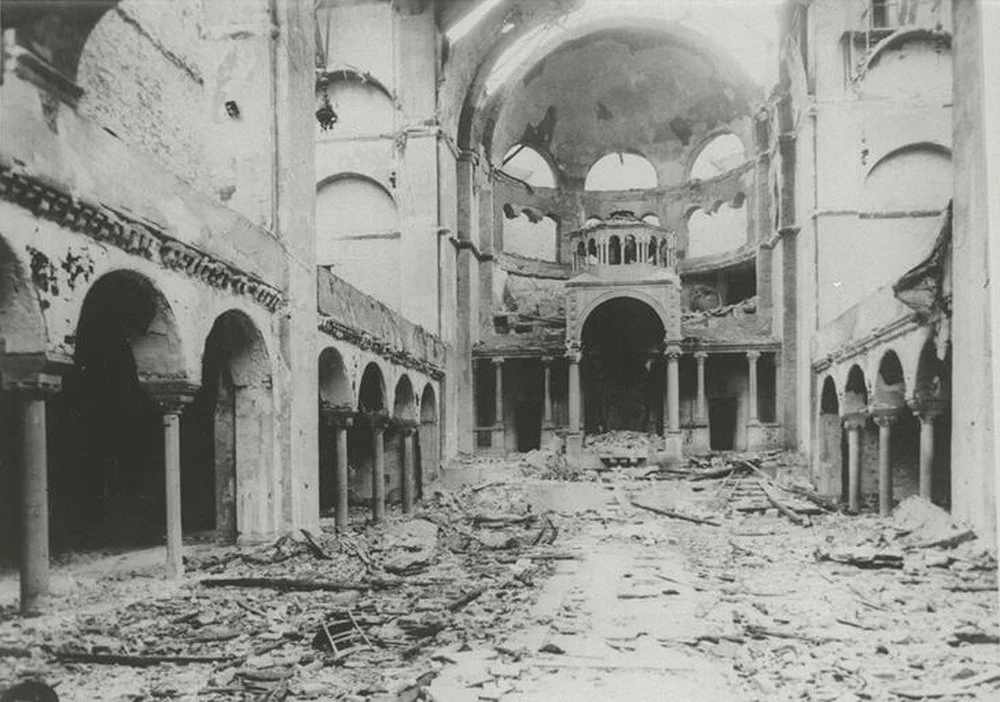
The 20th century also witnessed the horrors of the Holocaust, the largest genocide in human history, where the Nazi regime systematically murdered six million Jewish people. For years before the violence, the Nazi propaganda machine laid the groundwork for turning European citizens against the Jewish people. As a result, the things that came next went uncontested. First were boycotts of Jewish businesses in Germany, followed by the expulsion of Jewish employees of university and government employment. Inch by inch, Jewish rights were taken away. Jewish doctors could not practice in German hospitals. Jewish citizens were stripped of their voting rights and required to register all property and surrender driver's licenses and car registrations. Then came the arrests, ghettos, concentration camps, and gas chambers – all for being Jewish.

After World War II, antisemitism persisted through neo-Nazism and in the Soviet Union. Today, it manifests in various forms, including media, politics, and online spaces, often tied to conspiracy theories and hateful rhetoric. It shows itself on public streets through vandalism of Jewish property, harassment, and violence targeting Jewish people. Antisemitism is alive on school campuses in the same ways, both at the university and pre-college levels.
Since the dawning of the Common Era, Jewish people have endured antisemitism and persecutions.
Antisemitism can take several forms:
Antisemitism profoundly impacts individuals, fostering fear, isolation, and trauma. Communities grapple with the threat of violence and discrimination, while society suffers from the division and conflict that hatred breeds.
Antisemitism profoundly impacts individuals, fostering fear, isolation, and trauma.
To tackle antisemitism, we must first identify it. Educate yourself about Jewish culture and history, engage in open dialogues, and call out antisemitic remarks or actions when you witness them.
Education is a vital tool in combating antisemitism. Schools, religious institutions, and community groups should incorporate teachings about Jewish history and the Holocaust, fostering empathy and understanding among diverse populations. Local Jewish community centers often offer classes where you can learn more. Here are a few resources that can help you learn more about the Jewish faith and antisemitism:
To build community, you need to know your community. Search for Jewish organizations and businesses in your community and support them. Ask how you can help, be present and build bridges.
To build community, you need to know your community.
For the entire law is fulfilled in keeping this one command: “Love your neighbor as yourself.”
—Galatians 5:14